
Quick Facts
- Common Names: Swordtail, Green Swordtail
- Scientific Name: Xiphophorus hellerii
- Adult Size: 5-6 inches (males slightly smaller, females larger)
- Lifespan: 3-5 years
- Care Level: Beginner
- Temperament: Peaceful (males can be territorial with each other)
- Diet: Omnivore
- Minimum Tank Size: 20 gallons (29+ gallons recommended)
- Temperature Range: 72-82°F (22-28°C)
- pH Range: 7.0-8.0
- Water Hardness: 12-18 dGH (moderately hard to hard)
- Breeding Difficulty: Very Easy
- Native Range: Central America (Mexico, Guatemala, Honduras)
Introduction
Want a fish that’s colorful, active, easy to care for, and brings endless entertainment? Swordtail fish check all the boxes. Named for the male’s dramatic sword-like tail extension, these lively fish have been aquarium favorites for generations. They’re perfect for beginners who want a hardy species that tolerates mistakes, and they’re rewarding for experienced keepers who enjoy breeding projects. Fair warning: these fish breed so easily that you might find yourself with hundreds of babies before you know it. This guide covers everything you need to keep Swordtails thriving-without turning your tank into a nursery.
Video Overview
Appearance
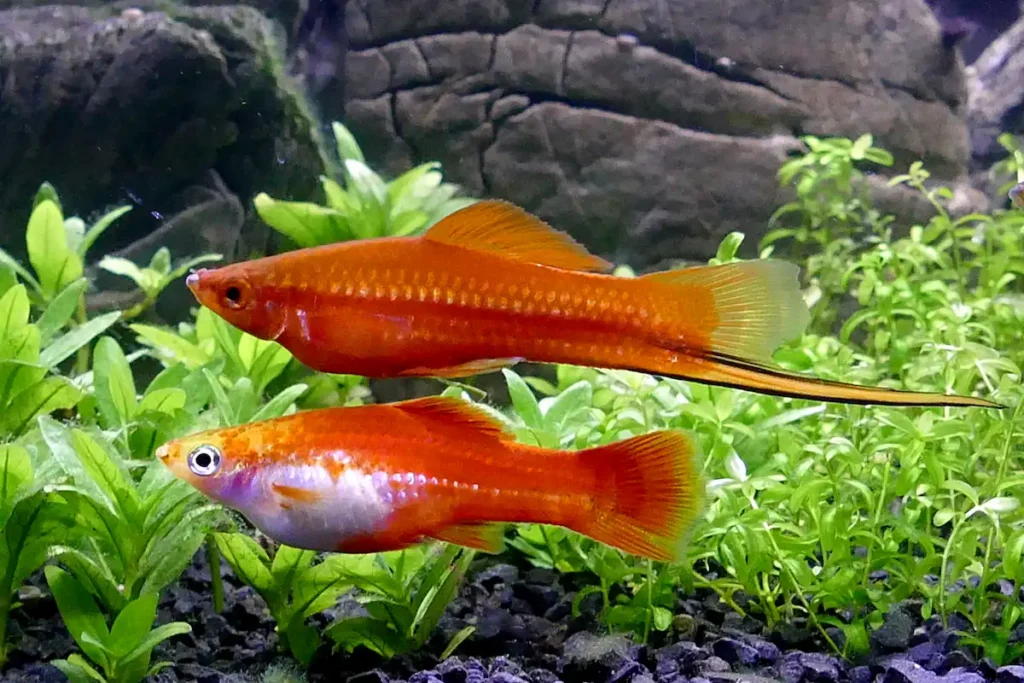
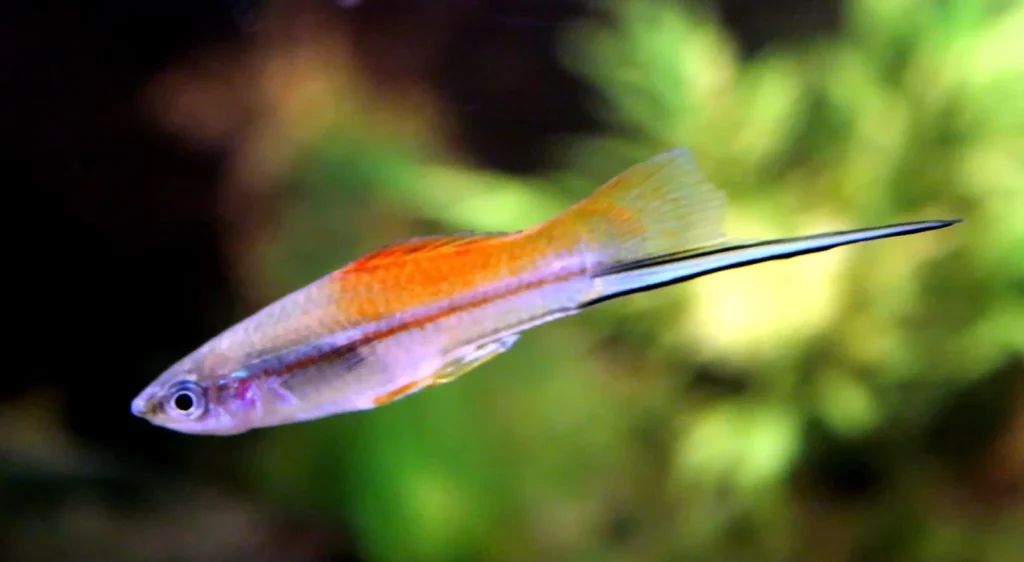
Male Swordtails are instantly recognizable by their namesake feature: a long, pointed extension on the lower part of the tail fin that looks like a sword. This “sword” can be as long as 2-3 inches and comes in various colors depending on the variety. Females have rounded tails without the sword and are generally larger and plumper.
Both sexes have elongated bodies with a slightly arched back. The male’s body is more streamlined, while females develop a fuller, rounder belly, especially when pregnant (which is almost always if males are present).
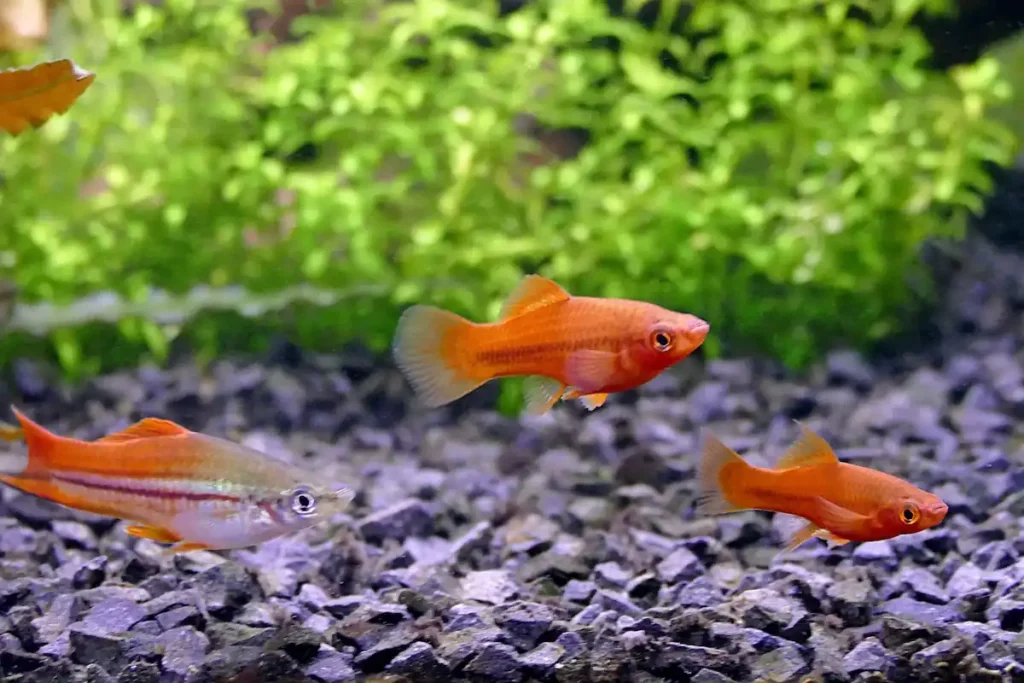
Wild Swordtails are green with orange, yellow, or blue horizontal bands. But decades of selective breeding have produced a stunning rainbow of color varieties: Red Wag (red body with black fins), Red Velvet (deep crimson red), Marigold (bright orange-yellow), Pineapple (yellow with black markings), Black Nubian (solid black), Neon (electric orange), and many more.
Males also sport a large, sail-like dorsal fin that they raise during courtship displays to impress females and intimidate rival males. It’s quite a show when multiple males are competing for attention.
Creating the Right Environment
Swordtails are active swimmers that need horizontal swimming space more than vertical height. They’re also enthusiastic jumpers, so a secure lid is non-negotiable.
Tank size matters. A 20-gallon tank is the absolute minimum for a small group, but 29-30 gallons is much better. These fish reach 5-6 inches and swim constantly. Plus, they breed prolifically-you’ll need space for inevitable fry. If you plan to keep multiple males or a breeding colony, start with 40+ gallons.
Dense planting creates security. In the wild, Swordtails live in heavily vegetated streams. Recreate this with Amazon swords, Java fern, Anubias, and floating plants like Java moss or guppy grass. The plants serve double duty: they make Swordtails feel secure and provide hiding spots for fry to escape being eaten.
Water movement is appreciated. Unlike some species that need gentle flow, Swordtails come from fast-moving rivers and actually enjoy moderate current. A quality hang-on-back or canister filter that creates some water movement is ideal. Aim for turnover of 4-5 times the tank volume per hour.
Substrate isn’t critical. Swordtails are mid-to-top level swimmers that rarely interact with substrate. Dark sand or fine gravel works well and makes their colors pop. Avoid sharp-edged gravel since fry will hide along the bottom.
Care Basics
Water: Maintain temperature at 72-82°F (ideal is 75-78°F), pH at 7.0-8.0, and hardness at 12-18 dGH. Swordtails prefer moderately hard to hard water-they’re one of the few species that actually do better in harder water. They can tolerate a wide range of conditions, but stability is key. Avoid sudden temperature drops or pH swings.
Tank Size: A 20-gallon tank can house 5-6 Swordtails short-term, but plan for 29-40 gallons if you want to breed or keep multiple males. Remember: one female can produce 50-100 babies monthly. Do the math.
Food: Swordtails are enthusiastic omnivores that eat almost anything. Feed high-quality tropical flakes or micro-pellets as the staple diet once or twice daily. Supplement 2-3 times per week with protein-rich foods like frozen or live brine shrimp, bloodworms, daphnia, and mosquito larvae. They also need vegetable matter-blanch zucchini medallions, cucumber slices, shelled peas, or broccoli and drop them in. Remove uneaten vegetables after 24 hours. Feed juveniles slightly more protein to support growth.
Equipment: Use a quality filter rated for your tank size or slightly larger. Swordtails produce moderate waste, and females constantly releasing fry add to the bioload. A heater is necessary to maintain stable temperature. Always use a tight-fitting lid-Swordtails are accomplished jumpers, especially when startled or during breeding displays.
Maintenance: Perform 25% water changes weekly or 30-40% biweekly. Test water parameters weekly, keeping ammonia and nitrite at 0 ppm and nitrates below 40 ppm. Swordtails tolerate higher nitrates than sensitive species, but clean water prevents disease. Vacuum substrate during water changes to remove waste and uneaten food.
Behavior
Swordtails are active, social fish that constantly swim throughout the tank, especially in the mid-to-upper levels. They’re curious, bold, and don’t hide much once established. Males display fascinating courtship behavior-chasing females, raising their large dorsal fins, and showing off their sword extensions. It’s like watching an underwater dance competition.
While generally peaceful, males can be territorial and competitive with each other, especially when females are present. A dominant male will claim territory and chase subordinate males away. This rarely results in injury but can stress lower-ranking fish. The solution is simple: keep one male or provide enough space and females (1:3 ratio) so aggression disperses.
Females are calmer and spend more time foraging. Pregnant females (which is constantly) may become slightly more aggressive and seek hiding spots when close to giving birth.
Swordtails are prolific breeders-ridiculously so. If you have males and females together, reproduction is inevitable. Females store sperm for months and can produce multiple batches of fry from one mating. This is fun if you want babies, but be prepared with a plan for what to do with hundreds of fry.
Tank Mates
Good choices: Swordtails are excellent community fish that coexist peacefully with most similarly-sized, non-aggressive species. Perfect companions include other livebearers (Platies, Mollies, Guppies), peaceful tetras (Neon, Cardinal, Ember, Serpae), Rasboras, Danios, Corydoras catfish, Bristlenose Plecos, Otocinclus, Kuhli Loaches, Dwarf Gouramis, Honey Gouramis, peaceful Rams, and even Angelfish in larger tanks. Snails (Mystery, Nerite) and larger shrimp (Amano) work well too.
Be careful with: Very small fish or newborn fry may be eaten. Cherry shrimp might get nibbled. Aggressive fin nippers (some barbs) may harass Swordtails. Very slow, long-finned fish like Fancy Guppies might get outcompeted for food.
Avoid: Aggressive or territorial cichlids (Oscars, Jack Dempseys, Texas Cichlids, African cichlids), Pufferfish, large predatory fish, and Crayfish. Also avoid Goldfish-they need cooler water and will eat baby Swordtails. Don’t keep Swordtails with fish requiring soft, acidic water like Discus or wild-caught Rams.
Group size: Keep a 1:3 male-to-female ratio (one male for every three females). This prevents any single female from being constantly harassed and reduces male-on-male aggression. In tanks under 40 gallons, consider keeping only one male. You can keep all females, but then you won’t see the dramatic sword displays and courtship behavior.
Common Health Issues
Ich (White Spot Disease): Small white spots appear on body, fins, and gills, resembling salt grains. Fish rub against objects and may gasp at the surface. Caused by parasites, often triggered by temperature fluctuations or stress. Gradually raise tank temperature to 82-86°F over 24 hours, increase aeration, add aquarium salt (1 tablespoon per 5 gallons), and treat with ich medication containing malachite green or formalin. Continue treatment for 7-10 days even after spots disappear.
Fin Rot: Fins appear frayed, ragged, or discolored at edges. In severe cases, fins rot away completely. Caused by bacterial infection (Aeromonas, Pseudomonas) triggered by poor water quality, stress, or injury from aggressive tank mates. Treat by improving water quality immediately, perform 25-50% water change, and use antibacterial medications (API E.M. Erythromycin, Maracyn). May need antifungal medication too (Methylene Blue, Ich-X). Prevent by maintaining excellent water quality and avoiding overcrowding.
Velvet Disease: Fish develop gold, rust-colored, or yellow dusty coating that looks velvety. They rub against objects, lose appetite, and breathe rapidly. Caused by Oodinium parasites. Darken the tank (parasites need light), raise temperature to 82°F, and treat with copper-based medications or malachite green. Remove activated carbon from filter before treating.
New fish: Always quarantine new Swordtails for 2-3 weeks before adding to your main tank. This prevents disease introduction and gives you time to observe for health issues. Quarantine is especially important with Swordtails since they’re often kept in crowded conditions at pet stores.
Lighting & Appearance
Swordtails don’t have strong lighting preferences and adapt well to standard community tank lighting. Moderate lighting (6-8 hours daily) works perfectly. They show their best colors under full-spectrum lighting that brings out reds, yellows, and iridescent sheens.
Dark substrates make their colors more vibrant. Red varieties look stunning against black sand. Lighter substrates wash out their appearance slightly.
Swordtails are diurnal (active during day), with peak activity at dawn and dusk. They don’t need special lighting to thrive-just consistent day/night cycles. Avoid 24/7 lighting, which stresses fish and promotes algae growth.
Natural tannins from driftwood or Indian almond leaves can enhance coloration slightly and provide beneficial properties, though they’re not required like they are for some South American species.
Breeding
Swordtails are among the easiest fish to breed in home aquariums. They’re livebearers, meaning females give birth to fully-formed, free-swimming fry rather than laying eggs. If you have males and females together, breeding happens automatically-often whether you want it to or not.
Sexing: Males have the distinctive sword-like tail extension, a modified anal fin called a gonopodium (looks like a thin rod), and a larger dorsal fin. Females are larger, plumper, lack the sword, and have a triangular anal fin. Young fish develop swords at 3-4 months.
Breeding Setup: Swordtails breed in community tanks or dedicated breeding tanks. For a breeding tank, use 20-30 gallons with dense floating plants (guppy grass, Java moss, water sprite) where fry can hide. Include broad-leafed plants (Java fern, Anubias) at various levels. Maintain temperature at 78°F and perform regular water changes.
Triggering Breeding: Usually no special triggers needed-keep males and females together and nature takes over. Males constantly pursue females in courtship displays. To encourage optimal breeding, feed high-quality foods including live foods, maintain excellent water conditions, and keep stress low.
Gestation Period: 28-30 days from fertilization to birth (can range 21-35 days depending on temperature and stress levels). Pregnant females develop a dark gravid spot near the anal fin and their belly swells noticeably. Just before birth, they may isolate themselves and become more aggressive.
Birth: Females give birth to 50-100 fry at once (first-time mothers produce fewer, older females can produce 100+). Birth takes 2-6 hours with fry appearing in rapid succession. Amazingly, females can get pregnant immediately after giving birth, producing fry every 30 days. One female can produce over 1000 babies annually.
Fry Care: Adult Swordtails (including parents) will eat their fry. For survival, provide dense floating plants where fry instinctively hide, or use a breeding box/separate fry tank. Feed fry finely crushed flake food, liquid fry food, or newly hatched brine shrimp 3-4 times daily. They grow quickly and reach 1.5 inches in 3 months, sexually mature at 3-4 months. Separate males and females by 3 months to prevent unwanted breeding.
Important: Have a plan for fry before breeding. Local fish stores may accept juveniles, or you can sell/give them away to other hobbyists. Don’t release them into natural waterways-it’s illegal and ecologically harmful.
Swordtails breed so easily that controlling population is often the bigger challenge than encouraging it!
FAQ
Q: Are Swordtail fish good for beginners?
A: Yes! Swordtails are perfect beginner fish. They’re hardy, adaptable, peaceful (males can squabble but rarely cause injury), and forgive common mistakes. Their easy breeding also makes them great for learning about fish reproduction.
Q: What size tank do Swordtails need?
A: Minimum 20 gallons for a small group, but 29-30 gallons is much better. They’re active swimmers that need horizontal space. If breeding, plan for even larger tanks since fry production is constant.
Q: How many Swordtails should be kept together?
A: Keep groups with a 1:3 male-to-female ratio (one male per three females minimum). This prevents female harassment and reduces male aggression. Never keep just two males-they’ll fight constantly.
Q: How often do Swordtails breed?
A: Constantly. Females can get pregnant immediately after giving birth and produce 50-100 fry every 28-30 days. One female can produce over 1000 babies per year under good conditions.
Q: What do Swordtail fish eat?
A: They’re omnivores that eat flakes, pellets, frozen/live foods (brine shrimp, bloodworms, daphnia), and blanched vegetables (zucchini, cucumber, peas). Feed a varied diet for best health and coloration.
Q: Can male Swordtails be kept together?
A: In larger tanks (40+ gallons) with plenty of females and hiding spots, yes. In smaller tanks, keep only one male or expect territorial disputes and stress. Males constantly compete for female attention.
Conclusion
Swordtails combine beauty, personality, and ease of care in one attractive package. Their vibrant colors, active behavior, and fascinating courtship displays make them endlessly entertaining. They’re forgiving enough for beginners yet interesting enough for experienced keepers. Just remember: with great ease of breeding comes great responsibility for finding homes for hundreds of babies. If you’re ready for an active, colorful community fish that thrives with basic care, Swordtails deliver on every front.
Recommended Products


Related Guides
- Platy Care Guide: Close relatives of Swordtails, also easy-breeding livebearers perfect for community tanks
- Guppy Care Guide: Another colorful livebearer that makes excellent tank mates for Swordtails
- Molly Care Guide: Hardy livebearers that thrive in similar hard water conditions as Swordtails
- Corydoras Catfish Care Guide: Peaceful bottom-dwellers that complement mid-level swimming Swordtails perfectly