
Quick Facts
- Common Names: Molly, Livebearer, Common Molly, Short-fin Molly, Sailfin Molly (depending on variety)
- Scientific Name: Poecilia sphenops (Common Molly); Poecilia latipinna (Sailfin Molly); Poecilia velifera (Yucatan Molly)
- Adult Size: 4-4.5 inches (10-11 cm); Sailfin varieties up to 6 inches (15 cm); Dwarf mollies up to 2 inches (5 cm)
- Lifespan: 3-5 years in captivity
- Care Level: Beginner
- Temperament: Peaceful
- Diet: Omnivore
- Minimum Tank Size: 10 gallons (for 2 fish); 20+ gallons for groups of 4+
- Temperature Range: 72-80°F / 22-26°C
- pH Range: 7.0-8.0 (neutral to slightly alkaline)
- Water Hardness: 12-25 dGH (moderately hard water)
- Breeding Difficulty: Easy
- Native Range: Central America, Mexico, and Southern USA; found in freshwater, brackish, and coastal waters
Introduction
Molly fish are among the most beginner-friendly species you can bring home. These peaceful, colorful livebearers have been aquarium favorites for decades, and for good reason-they’re incredibly hardy, adaptable to most tank conditions, and come in stunning color varieties. Whether you’re setting up your first tank or adding to an established community, mollies are a reliable choice that will reward you with active, engaging behavior and the potential for breeding success if you’re interested. This guide covers everything you need to know to keep your mollies thriving, from tank setup to breeding basics.
Video Overview
Appearance
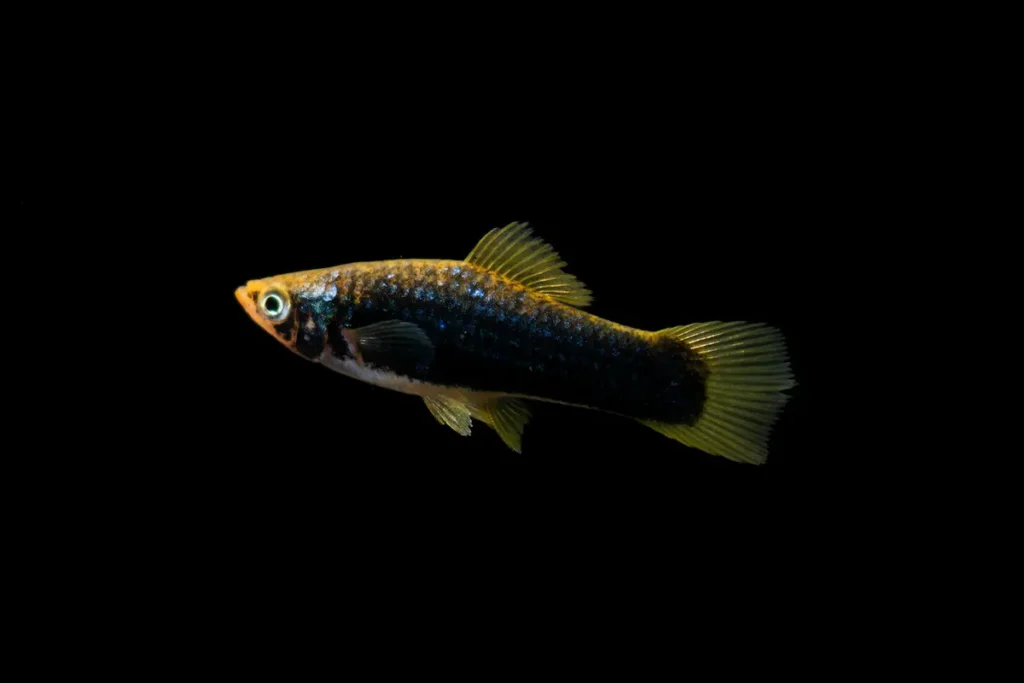
Molly fish have a stocky, flattened body that tapers slightly toward the mouth, with rounded fins and a fan-shaped tail. Their most distinctive feature is their active, graceful swimming style and the vibrant colors available in captive-bred varieties.
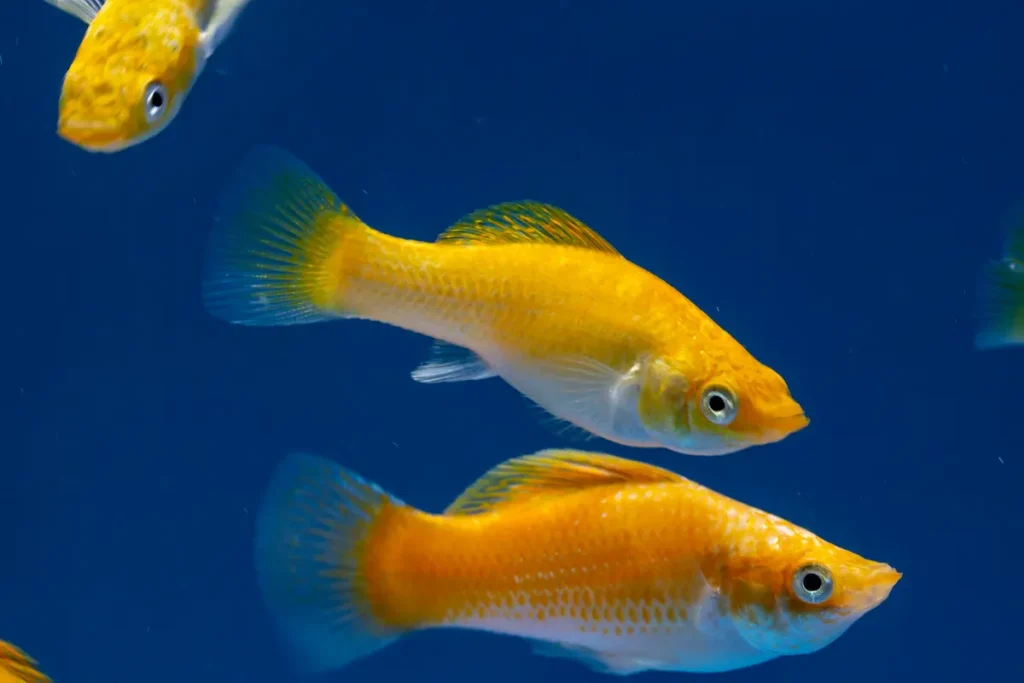
Wild mollies are dull silvery-gray, but captive breeding has produced an impressive palette. You’ll find black mollies (solid jet black or deep charcoal), orange and gold varieties, white or platinum mollies, dalmatian patterns (black spots on white or orange backgrounds), and lyretail varieties with flowing fins. Males tend to be smaller and slimmer than females, with brighter coloration and a pointed anal fin called a gonopodium (used for reproduction). Females are larger, rounder, especially when carrying fry, and have a fan-shaped anal fin.
One important note: Sailfin mollies display dramatically larger dorsal fins, especially males, which makes them spectacular but means they need more space than common short-fin varieties. Balloon mollies have a distinctive rounded belly-a result of selective breeding for the balloon-like shape-but this comes with higher waste production and potential digestive issues.
Key trait: Their preference for warmer, slightly alkaline water with minerals means they thrive in conditions that suit many community fish but especially pair well with other livebearers like guppies and platies.
Creating the Right Environment
Mollies are adaptable fish, but they truly shine in tanks that mimic their natural habitat-shallow, warm, vegetated waters with moderate flow. They prefer to swim near the top of the tank and enjoy spaces to explore among plants and decorations, which makes them feel secure and reduces stress.
Planted tanks with moderate lighting: Mollies thrive in planted tanks. Live plants (especially stem plants like water sprite and water wisteria) provide hiding spots, help stabilize water chemistry, and offer supplemental food grazing opportunities. Moderate lighting (8-10 hours daily) brings out their best colors.
Moderate water flow and open swimming space: Unlike bettas that prefer still water, mollies appreciate gentle to moderate water current, similar to their natural slow-moving river habitats. However, they also need open spaces to swim freely without battling strong currents. A filter rated for 4x tank turnover per hour is ideal.
Hard, mineral-rich water with stable parameters: This is critical. Mollies originally evolved in brackish and hard-water environments. They need calcium, magnesium, and other minerals to maintain healthy osmotic balance. If your tap water is soft (under 6 dGH), consider adding Wonder Shells or Equilibrium to boost minerals. Some aquarists add aquarium salt (about 1 teaspoon per 5 gallons) to replicate their natural brackish ancestry-this helps prevent diseases and supports better coloration, though it’s not strictly required in freshwater setups.
Care Basics
Water: Maintain a temperature between 72-80°F (22-26°C), with pH between 7.0-8.0. Mollies prefer slightly alkaline, moderately hard water (12-25 dGH). This is less demanding than some aquarium fish but more stable than tap water alone in many regions. Test your tap water’s GH and pH before setting up. If you’re in a soft-water area, plan to adjust hardness or stick with hardy short-fin mollies rather than sailfins.
Tank Size: For two mollies, a 10-gallon tank minimum works, but 20+ gallons is better for a small group and much easier to maintain stable parameters. Each additional molly needs at least 2-3 gallons of extra space. Sailfin mollies need more space-30+ gallons for a group. Here’s why: mollies are active swimmers and produce significant waste, so adequate volume keeps nitrate levels manageable and gives them room to establish territories without excessive aggression.
Food: Feed a varied diet twice daily, in amounts they can finish in 2-3 minutes. Molly fish are omnivores and not picky eaters-they’ll eat flakes, pellets, frozen foods, and fresh vegetables. Include high-quality flake or pellet food as the base (look for 30-40% vegetable matter content), supplement with frozen bloodworms or brine shrimp 2-3 times weekly, and offer blanched vegetables like spinach or zucchini slices weekly. Some aquarists find mollies graze on algae and microorganisms on tank surfaces, helping with maintenance. Remove uneaten food after a few minutes to prevent water quality issues.
Equipment: Use a filter rated for at least 4x the tank volume per hour. Hang-on-back or canister filters work well for mollies. An aquarium heater is essential-these are tropical fish that won’t thrive below 72°F. Use a thermometer to monitor temperatures. A lid is recommended to prevent jumping, especially during breeding or if startled. LED lighting on an 8-10 hour daily cycle supports color and plant growth.
Maintenance: Perform 25-30% water changes every 7-10 days in established tanks, or weekly if the tank is newly cycled or heavily stocked. Mollies produce more waste than some fish, so don’t skip maintenance. Test water parameters (ammonia, nitrite, nitrate, pH, GH) weekly until the tank matures, then monthly once established. Remove uneaten food and decaying plant matter promptly. Clean the filter intake monthly without disrupting the biological colony (rinse in old tank water, not tap water).
Behavior
Molly fish are active, diurnal swimmers most visible during daylight hours and sleeping at night. They’re curious and interactive, often approaching the glass when you approach the tank. In the wild, they occupy the upper water column near vegetation, and this preference continues in aquariums-they rarely venture to the tank bottom unless hunting for food.
Males display courtship behavior frequently, approaching females and displaying their dorsal fin (especially in sailfin varieties). This can seem aggressive but is normal mating behavior. Females sometimes hide in plants or behind decorations to escape persistent males, which is another reason grouping shouldn’t be too male-heavy. Molly fish are also surprisingly bold feeders-they’re typically the first fish to rush to new food sources.
In properly maintained tanks, mollies are calm, peaceful fish. However, stress triggers behavioral changes: fin nipping at each other or tank mates, darker coloration, loss of appetite, and erratic swimming. Overcrowding and poor water conditions are the biggest stress factors. They’re also omnivores that will nibble softer aquatic plants (especially new growth) if hungry, so feed adequately and include tough plants like anubias or java fern if plant protection is a priority.
Tank Mates
Good choices: Molly fish pair excellently with other peaceful, similarly-sized species. Other livebearers like guppies, platies, and swordtails share similar water parameter preferences. Tetras (especially larger species like cardinal tetras), corydoras catfish, danios, loaches, barbs, dwarf gouramis, and rasboras all work well. These combinations create vibrant, peaceful community tanks.
Be careful with: Bettas (males may become aggressive if the molly’s activity level stresses them), plecos (adult plecos can become territorial), and larger gouramis. Monitor any tank-mate pairing for signs of stress or aggression.
Avoid: Large predatory fish like oscars, jack dempseys, or large plecos that may eat smaller mollies. Also avoid aggressive cichlids unless you have a very large tank. Avoid small invertebrates like cherry shrimp, as molly fish will eat them (though larger amano shrimp sometimes survive in well-planted tanks with plenty of hiding spots).
Group size and ratio: Molly fish are social and should be kept in groups of at least 4 (though pairs work in smaller tanks). If keeping males and females, maintain a ratio of one male to three or four females to reduce harassment. This gives females breaks from mating attempts. All-male groups can work but may show increased territorial aggression; all-female groups (if you can source them) are ideal for reducing stress and avoiding uncontrolled breeding.
Warning: If you don’t want baby mollies, either keep only males or females, or be prepared for fry production. Females can produce 20-60 babies every 4-6 weeks, and they’ll quickly overpopulate a tank if left unchecked.
Common Health Issues
Molly fish are hardy, but certain conditions make them susceptible to specific diseases. The good news: most are preventable with proper care.
Ich (White Spot Disease): Caused by a parasitic protozoan, ich appears as tiny white spots on the body, fins, and gills, resembling salt grains. Infected fish rub against rough surfaces to relieve itching and may clamp their fins. Prevention focuses on stable water temperature and conditions that minimize stress. Treatment: Increase water temperature to 82-84°F (28-29°C) over 24 hours, perform 25% water changes every two days, and treat with aquarium salt (1 teaspoon per gallon) or anti-ich medication (like Aquarium Solutions Ich-X). Quarantine new fish for 2-3 weeks before adding to main tank. Duration: Typically resolves in 7-14 days with consistent treatment.
Fin Rot: A bacterial infection causing fins to appear ragged, discolored, or rotting from the edges inward. Often triggered by poor water quality, physical injury, or stress. Prevention is key: maintain excellent water quality, avoid overcrowding, and keep water temperature stable above 75°F. Treat with antibacterial medication (like Mardel Maracyn), perform frequent water changes, remove the affected fish to a hospital tank if possible, and improve tank conditions. Duration: 7-14 days with treatment; if untreated, it can spread and become fatal.
Livebearer Disease (Shimmying): Unique to livebearers like mollies, this manifests as the fish rocking side-to-side with clamped fins and lethargy. It’s triggered by low mineral levels (especially in soft-water setups) or poor water conditions. Prevention: Maintain GH above 8, use Wonder Shells or Equilibrium, ensure adequate filter cycling, and keep nitrate below 40 ppm. Some aquarists add 1 teaspoon of aquarium salt per 5 gallons. If symptoms appear, perform immediate water changes, boost minerals, and consider raising water temperature to 80°F. This condition can worsen quickly, so act immediately.
Prevention best practices: Quarantine all new fish for 2-3 weeks in a separate tank before introducing them to your main setup. This is the single most effective disease prevention step. Maintain consistent water parameters (no sudden pH, temperature, or hardness swings). Avoid overcrowding. Perform regular water changes. Feed a varied, high-quality diet. Remove sick fish promptly to prevent spread to tank mates.
Lighting & Appearance
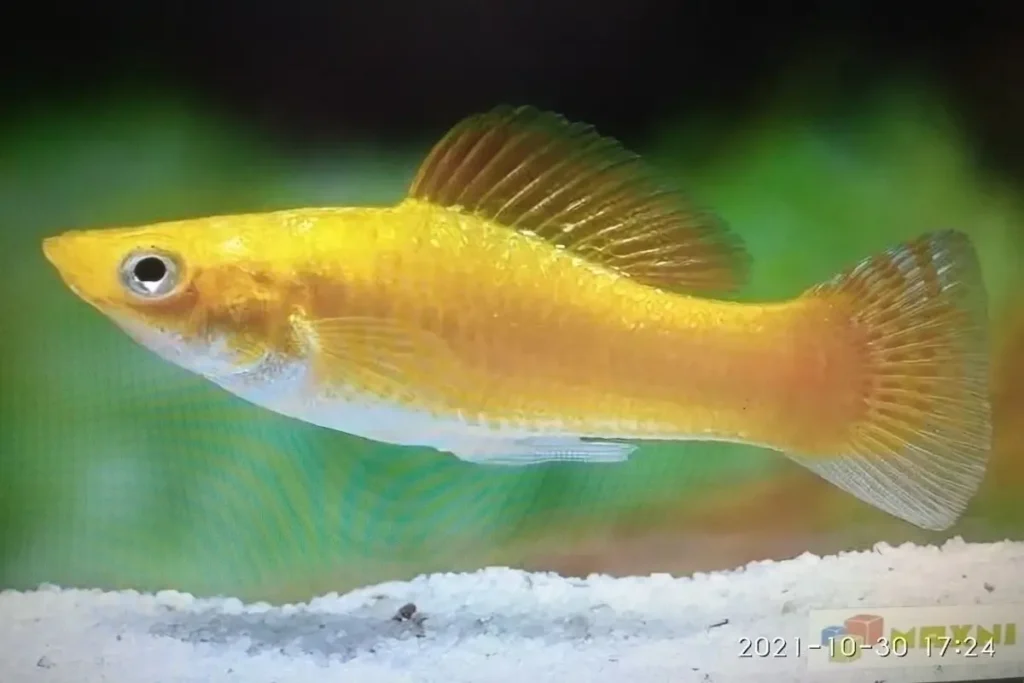
Molly fish show their best colors under moderate to bright lighting with a warm spectrum (2700-4000K color temperature). Warm-white LED lights bring out reds, oranges, and golds in colored varieties. Cool white (6500K+) lighting can wash out coloration, making fish appear duller.
Lighting also affects behavior: proper photoperiods (8-10 hours daily) support circadian rhythms, reduce stress, and encourage natural behavior. Dark backgrounds or subdued lighting can actually stress molly fish by making them feel exposed. A light-colored or planted background with moderate lighting creates the most natural appearance and behavioral confidence.
Interestingly, coloration fades with age and stress. A vibrant orange molly may become pale gold or white if housed in poor conditions, overcrowded tanks, or under cool lighting. This is reversible-improving conditions restores color.
Breeding
Molly fish are prolific breeders and among the easiest aquarium fish to spawn. They’re livebearers, meaning females carry fertilized eggs internally and give birth to fully-formed fry rather than laying eggs.
Breeding method: Livebearing. Males pursue females constantly using their gonopodium (modified anal fin) to fertilize eggs internally. A female can store sperm and produce multiple batches of fry over months without a male present (though fry will be smaller and fewer).
What triggers spawning: Temperature changes (warm spikes encourage breeding), consistent feeding with quality food (well-nourished females produce more fry), and the simple presence of healthy males. Essentially, if you have males and females in good condition, breeding happens naturally.
Gestation and fry production: Females typically give birth to live fry after 4-6 weeks of gestation. A first-time mother might produce 20-40 fry; experienced females regularly produce 50-100+ at a time. Fry are born fully-formed and swim independently, requiring no special care beyond small food portions.
Parental care: Molly fish show no parental care and will readily eat their own fry if given the chance. In community tanks, most fry get consumed by parents and tank mates, naturally controlling population.
Breeding in home aquariums: Molly fish breed so readily that many hobbyists’ challenge isn’t getting them to breed but preventing uncontrolled population explosions. If you want fry to survive, provide dense planting (water sprite, water wisteria, moss) or dedicated breeding boxes. Remove the female to a separate breeder tank or breeder box before she gives birth, then return her to the main tank. Feed fry crushed flakes, specialized fry food, or liquid fry food (like Repashy Fry Food) twice daily, keeping portions small.
Is breeding practical for beginners? Absolutely. Accidental breeding in established community tanks often results in a few surviving fry simply from the cover provided by plants. Some aquarists deliberately breed mollies for learning or to supply local fish clubs or friends.
FAQ
Q: What’s the difference between common mollies and sailfin mollies?
A: Common (short-fin) mollies reach 4-4.5 inches and have standard-sized dorsal fins. Sailfin mollies grow larger (5-6 inches) and males display dramatically enlarged dorsal fins, especially during courtship. Sailfins need more space (30+ gallons) and are slightly more sensitive to poor water conditions than common mollies.
Q: Can I keep molly fish in a 5-gallon tank?
A: Not recommended. While two mollies could technically survive short-term in 5 gallons, they’ll struggle with waste production and parameter stability. Mollies are active swimmers that produce significant bioload. Start with 10+ gallons minimum for sustainable, healthy care.
Q: Do molly fish need salt in their water?
A: Not strictly required, but many aquarists add 1 teaspoon per 5 gallons to support health, especially if mollies seem stressed. Salt isn’t essential in freshwater tanks with hard, mineral-rich water, but it mimics their brackish natural habitat and can prevent disease. Important note: salt can harm aquatic plants and snails at higher concentrations, so if you keep these, skip salt or use it sparingly.
Q: My molly fish is hiding and refusing food. What’s wrong?
A: This signals stress or illness. First, check water parameters-ammonia, nitrite, or sudden pH/temperature changes are common culprits. Perform a 25% water change immediately and test all parameters. If parameters are fine, check for aggression from tank mates or overcrowding. If the fish shows white spots, split fins, or lesions, suspect disease and consider quarantining. Mollies that hide usually recover quickly once stressors are removed.
Q: How often should I do water changes for molly fish?
A: In established tanks, perform 25-30% water changes every 7-10 days. In newly cycled or heavily stocked tanks, do weekly changes. Molly fish produce significant waste, so don’t skip maintenance. Monitor nitrate levels-if they exceed 40 ppm, increase water change frequency or volume.
Q: Can molly fish live in a fishbowl or unfiltered tank?
A: Not recommended. Even though mollies are hardy, they produce considerable waste and need adequate filtration and water volume to maintain stable parameters. Unfiltered or under-filtered tanks quickly accumulate ammonia and nitrite, stressing or killing fish. A 10+ gallon tank with a proper filter is the minimum.
Conclusion
Molly fish are the perfect bridge between pure beginner fish and more specialized species. They’re forgiving enough for first-time aquarists, colorful and engaging enough to keep hobbyists entertained, and breeding readily for those interested in reproduction. Whether you’re setting up your first tank or expanding an established community, mollies reward good care with vibrant color, active behavior, and the genuine enjoyment that comes from keeping healthy, thriving fish. Start with stable water parameters, a reasonably sized tank, and varied diet, and your mollies will thrive.
Recommended Products


Related Guides
- Guppy Care Guide: Similar livebearer that pairs perfectly with mollies; shares the same water parameter preferences
- Platy Care Guide: Another beginner-friendly livebearer; works great in mixed livebearer tanks
- Neon Tetra Care Guide: Peaceful community fish that complement mollies; works in planted setups
- Corydoras Catfish Care Guide: Excellent bottom-dwelling tank mate that helps with waste cleanup