
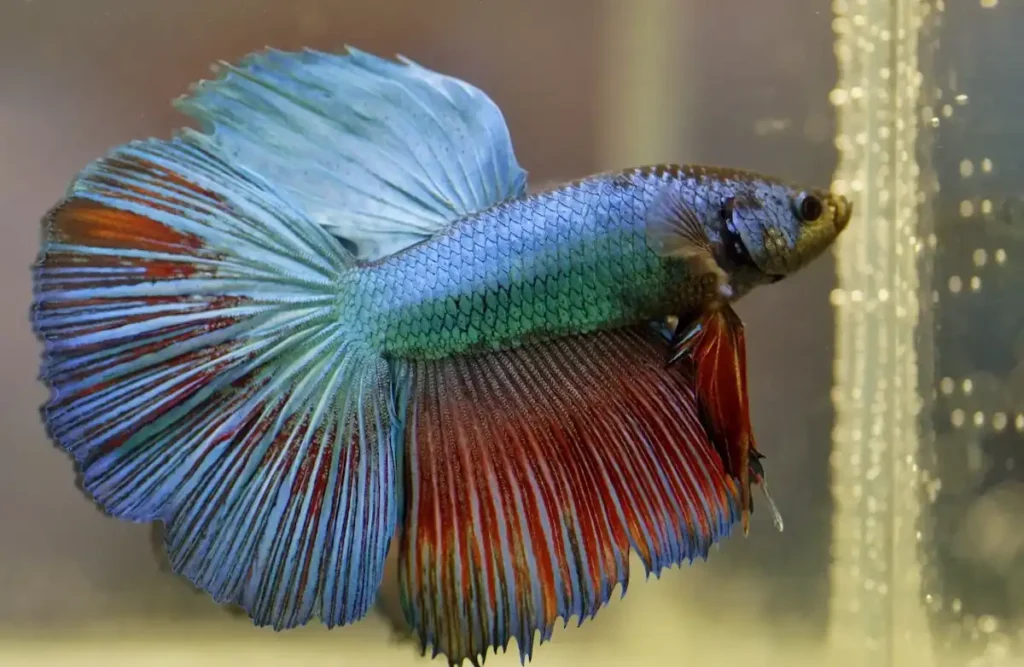
Quick Facts
- Common Names: Siamese fighting fish, Siamese fighter, betta
- Scientific Name: Betta splendens
- Adult Size: 2.5 inches (6.35 cm) body length, not including tail
- Lifespan: 3-5 years in captivity
- Care Level: Beginner
- Temperament: Aggressive
- Diet: Carnivore
- Minimum Tank Size: 5 gallons (10 gallons recommended)
- Temperature Range: 76-82°F / 24-28°C (78-80°F ideal)
- pH Range: 6.5-7.5
- Water Hardness: 3-4 dGH
- Breeding Difficulty: Moderate
- Native Range: Southeast Asia (Thailand, Cambodia, Laos, Malaysia, Vietnam; primarily Mae Khlong and Chao Phraya river basins)
Introduction
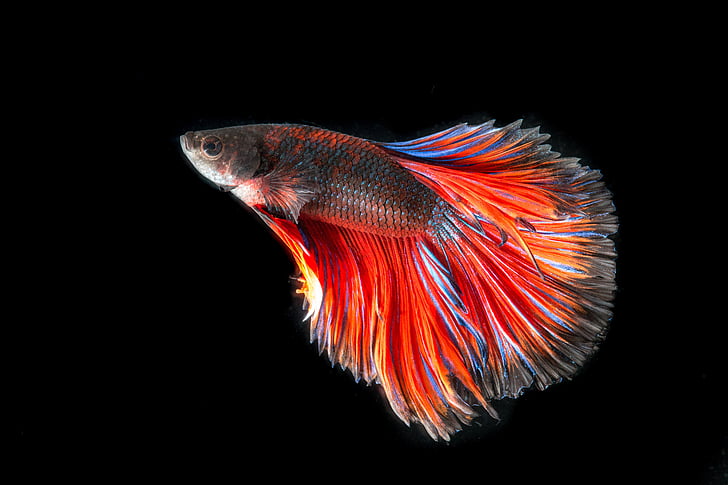
With their flowing fins and jewel-tone coloration, betta fish are living art-each one a masterpiece shaped by selective breeding into endless color combinations and patterns. Whether you’re drawn to the vibrant reds and blues of a marble pattern, the metallic shimmer of a copper betta, or the contrast of a butterfly variety, bettas deliver visual drama in a compact package. These are beginner-friendly fish once you understand their specific needs: they’re hardy, adaptable, and incredibly interactive, often recognizing their keeper and swimming to the glass at feeding time. However, the common misconception that bettas thrive in tiny bowls has left many of these remarkable fish struggling in inadequate conditions. This guide walks you through everything needed to keep your betta thriving.
Video Overview
Species Summary & Appearance
Betta fish possess streamlined, moderately compressed bodies designed for quick acceleration and precise maneuvering through dense vegetation. Their slightly upturned mouth facilitates surface feeding-a behavior you’ll notice when they eagerly hunt pellets from the top of the water. In the wild, male bettas display a fundamental gradient of green, red, blue, and black, but selective breeding has unleashed an extraordinary palette: solid colors, marbling, butterfly patterns (contrasting body and fin colors), koi patterns, and even metallic finishes that catch light like polished chrome. Females typically wear more subdued coloration, though selectively bred females can rival males in vibrancy.

The most striking difference between males and females is their fins-males have long, flowing fins used in territorial displays, while females are thinner with shorter fins. Males possess a dark gill flap membrane called the “beard” they flare dramatically during aggression or courtship. The surest way to identify a female is the white egg spot (ovipositor tube) near the base of the ventral fins, plus the horizontal stress stripes that appear along their body when they’re spawning-ready or frightened.
- Setup Consideration: The long, delicate fins of many domestic bettas are easily damaged by sharp decorations and strong filter currents, requiring careful attention to aquascaping choices and gentle water flow. Additionally, the upturned mouth means bettas naturally feed from the surface, making top-feeding techniques essential.
Environmental Personality
Bettas naturally inhabit rice paddies with dense vegetation providing filtered, moderate light and endless places to hide. Recreating this environment brings out their most vibrant colors and natural behaviors. Dense planting along the sides and back with moderate open swimming space in the middle creates the perfect balance-they have security zones and territory to patrol. Low lighting (dim or dappled through floating plants) reduces stress and actually makes them bolder, spending more time in view rather than hiding. A tannin-stained water column from leaves or driftwood mimics their native blackwater habitats and noticeably calms them. Here’s how to set the stage:
- Substrate and Hiding: Soft sand (1-2 inches deep) allows them to rest comfortably and supports rooted plants. Dense java fern clusters along the back wall create secure hiding spots, visibly reducing stress and bringing out bolder colors during feeding time. Ceramic caves or smooth driftwood add structure without sharp edges.
- Low Lighting: Bettas thrive under moderate to dim lighting (5500-6500 Kelvin). Avoid overly bright setups that cause stress and hiding behavior. A photoperiod of 8-10 hours daily mimics their natural rhythm and regulates biological functions.
- Floating Plants and Leaf Litter: Floating plants create shaded resting areas near the surface where bettas naturally spend time. Indian almond leaves and botanical decorations release tannins, lower pH gently, provide antibacterial properties, and help fish recover from stress. You’ll notice bettas are less shy and display richer coloration in tannin-stained water.
- Gentle Water Flow: Bettas evolved in still or slow-moving water and struggle against strong currents that damage their elaborate fins. A sponge filter powered by a low-flow air pump provides the gentle movement they appreciate without the stress of powerheads or strong hang-on-back filter output.
- Vertical and Horizontal Layers: Mix tall plants, driftwood, and caves to create depth. Bettas need both exploration zones and refuge-this layered approach keeps them active and visible while maintaining the security they crave.
Care Requirements
- Water Parameters: Keep temperatures between 76-82°F (78-80°F optimal) using a quality heater with thermostat. Maintain pH between 6.5-7.5 with minimal fluctuation. Water hardness should stay at 3-4 dGH. Stable parameters are critical-rapid changes stress bettas and trigger disease.
- Tank Size: While bettas can survive in small vessels due to their labyrinth organ (which allows air-breathing), they thrive in a minimum 5-gallon tank, with 10 gallons strongly recommended for water parameter stability and long-term health. Larger tanks buffer against ammonia spikes and temperature swings.
- Diet: Feed high-quality carnivorous pellets formulated for bettas (Hikari Betta Bio-Gold or similar insect-based varieties). Supplement with frozen or freeze-dried mosquito larvae, brine shrimp, mysis shrimp, or bloodworms 2-3 times weekly as treats. Feed small amounts (2-3 pellets per feeding) once or twice daily; bettas have stomachs the size of their eyes, and overfeeding causes bloat, swim bladder issues, and ammonia spikes. Include one fasting day per week to aid digestion.
- Essential Equipment: A heater and thermostat are non-negotiable for maintaining tropical temperatures. A sponge filter or low-flow hang-on-back filter keeps water quality stable with gentle current. A thermometer monitors stability. Include a tank lid to prevent jumping and maintain humid air above the water for labyrinth organ development. Use water conditioner to remove chlorine and heavy metals before adding tap water to the tank.
Maintenance: Perform 15-25% water changes weekly in filtered, cycled tanks using a gravel vacuum. In unfiltered tanks, do 50% changes twice weekly plus a full 100% weekly. Always condition new water and match temperature before adding to the tank. Test weekly for the first two months, then monthly after: ammonia (0 ppm), nitrite (0 ppm), nitrate (under 20 ppm), pH (6.5-7.5), and general hardness (3-4 dGH).
Behavior & Temperament
Healthy bettas are active explorers during daylight, constantly investigating decorations, swimming through plants, and patrolling their territory. They rest on leaves and flat surfaces at night, though quick daytime naps are normal. Bettas are bold, curious, and remarkably interactive-many recognize their keepers and rush to the glass at feeding time. Males display elaborate territorial behavior, flaring their gills and spreading their fins to establish dominance. Females are more reserved but equally capable of feisty personalities. Some bettas enjoy enrichment items or chasing shadows, displaying problem-solving behavior that hints at intelligence.
Bettas are solitary fish; males cannot cohabitate with other males under any circumstances (lethal aggression results). The controversial female “sorority” approach requires extensive experience and 20+ gallon tanks with five or more females and careful monitoring-not recommended for beginners. Males will aggressively attack bettas and may nip at slow-moving tank mates with flowing fins (guppies, other long-finned fish). This territoriality evolved in oxygen-poor rice paddies where competition for resources was fierce, but in captivity, isolation is often the safest option.
The tank environment dramatically affects visibility: dense planting provides visual barriers that reduce constant aggressive displays, security zones decrease anxiety, and moderate lighting encourages them to spend more time in view rather than hiding. Overcrowded or bare tanks significantly increase stress, leading to faded colors, aggression, and disease susceptibility.
Tank Mates & Compatibility
Good Matches:
- Ghost Shrimp: Transparent appearance doesn’t trigger predatory response; keep 2-4+ for security
- African Dwarf Frogs: Peaceful, occupy different water column, similar care requirements
- Neon Tetras: Fast swimmers that occupy mid-water; school behavior keeps them away from aggression; minimum 6
- Corydoras Catfish: Bottom-feeders occupying different zone; peaceful and hardy
- Harlequin Rasboras: Peaceful, active swimmers that distract aggressive bettas
- Clown Plecos: Non-aggressive bottom-feeders with tough skin; maximum 4 inches
- Ember Tetras: Small, fast, peaceful; occupy mid-water column
- Snails: Generally safe; some bettas may eat smaller snails but won’t attack larger apple snails
Use Caution:
- Fancy Guppies: Long fins trigger predatory response; only short-finned feeder guppies work
- Black Phantom Tetras: Can be fin-nippers despite small, peaceful appearance
- Zebra Danios: Active top-feeders that compete at the surface and may trigger aggression
- Candy Cane Tetras: Fin-nippers that damage betta’s elaborate fins
Avoid Completely:
- Other bettas (especially males)-lethal aggression
- Large plecos (Common Pleco, Gold Nugget)-incompatible size and aggression
- Cichlids-too aggressive
- Goldfish-incompatible temperature and parameters
- Other aggressive species
Group Size & Community Considerations: Tank size is critical-minimum 10 gallons for tank mates, 15+ gallons ideal. Provide ample hiding spots so the betta can retreat when overwhelmed. Monitor behavior closely during the first week; some bettas are peaceful while others are naturally aggressive regardless of circumstances. Feed in separate areas to reduce competition. Include peaceful dither fish (small schooling species) if attempting female sororities-never a single other betta.
Diseases & Health
- Fin Rot: Ragged, frayed, or discolored fins; loss of appetite. Caused by poor water quality, bacterial infection, sharp decorations, or stress. Prevention: maintain excellent water quality with regular changes, use smooth decorations, avoid overcrowding, reduce stress through proper tank setup.
- Ich (White Spot Disease): White salt-grain spots on body and fins; fish scratches against objects; lethargy; loss of appetite. Caused by parasitic infection (Ichthyophthirius multifiliis), often stress-related. Prevention: maintain stable water temperature, avoid fluctuations, quarantine new fish, reduce stress.
- Columnaris: Whitish-gray lesions on body or fins; frayed fins; loss of appetite; can progress rapidly. Caused by bacterial infection (Flexibacter columnaris), triggered by stress or poor water quality. Prevention: maintain excellent water quality, reduce stress, avoid overstocking, ensure proper temperature.
Quarantine Protocol: New arrivals should be quarantined 4-6 weeks in a separate tank (minimum 1-2 gallons) away from the main system. Monitor closely for illness including parasites, lack of appetite, lethargy, redness, swelling, sores, fin rot, or abnormal feces (clear or white instead of brown). If illness appears, treat with appropriate medication and restart the 4-6 week quarantine after recovery. Never share nets or equipment between quarantine and main tanks.
Lighting & Color Optimization
Bettas’ colors respond dramatically to light choices. Warm-spectrum lighting (5500-6500 Kelvin with balanced full-spectrum) brings out reds and blues, making coloration appear vibrant and alive. Cool white light can make the same fish appear muted and dull. Moderate lighting intensity is ideal-avoid excessively bright setups that cause stress and hiding. Full-spectrum LED lights are recommended: they provide balanced illumination without heat, are dimmable for intensity adjustment, and support aquatic plants if your setup includes them.
A standard photoperiod of 8-10 hours daily with consistent on/off times (use a timer) supports natural biological rhythms, hormone regulation, and reproductive readiness. Irregular lighting disrupts sleep and stresses fish. Interestingly, dimmer, more subdued lighting reduces stress and encourages natural behavior-bettas appear less shy and more comfortable in reduced-light environments mimicking their shaded rice paddy habitats. Light-colored sand substrates reflect available light and make colors pop, while dark substrates absorb light but can make paler fish stand out dramatically. Many bettas appear more relaxed and confident against dark backgrounds. Experiment with background color to find what brings out your individual fish’s personality and coloration best.
Breeding
Method: Bubble nest builder. Males construct elaborate bubble nests at the water surface using saliva and air, creating an incubation chamber for eggs.
Triggers: Cooler water followed by gradual warming mimics monsoon rains. Frequent partial water changes trigger spawning behavior. Temperature fluctuations simulate seasonal changes. Female vertical striping indicates breeding condition; robust male bubble nests signal readiness.
Parental Care: After spawning, the female is removed immediately. The male takes complete responsibility, collecting eggs in his mouth and placing them in the bubble nest. He fans eggs to prevent fungal growth and maintains nest integrity. The male doesn’t eat during this period and becomes highly aggressive. Eggs hatch within 24-36 hours; fry reach free-swimming stage around day 4, at which point the male is removed.
FAQ
Q: What size tank does a betta fish need?
A: A minimum 5-gallon tank with filtration and heating allows bettas to thrive, though 10 gallons is even better for stability and long-term health. Larger tanks buffer against ammonia spikes and temperature swings that stress fish.
Q: Can betta fish live with other fish?
A: Some bettas can cohabitate with peaceful, non-threatening tank mates in appropriately sized tanks (10+ gallons). Good options include corydoras, ghost shrimp, African dwarf frogs, and some tetras. However, many bettas are too aggressive and do best alone. Always monitor behavior carefully and be prepared to separate if aggression develops.
Q: How often should you feed a betta fish?
A: Feed once or twice daily with small portions (2-3 high-quality pellets per feeding) that the betta consumes within 2-3 minutes. Include one fasting day per week. Overfeeding causes serious health issues like bloat and swim bladder problems.
Q: What temperature should a betta fish tank be?
A: Bettas require consistent warmth between 76-82°F (24-28°C), with 78-80°F optimal. An aquarium heater with thermostat is essential in most climates. Temperature fluctuations cause stress and increase disease susceptibility.
Q: Do betta fish need a filter?
A: While not absolutely required in heavily planted tanks with very frequent water changes, a filter is highly recommended for easier maintenance and stable water quality. Sponge filters providing gentle, low-flow filtration are ideal. Unfiltered tanks require 50% changes twice weekly and 100% changes weekly.
Q: Are betta fish easy to care for?
A: Yes, bettas are beginner-friendly once their tank is properly established. They’re hardy, adaptable, and forgiving of minor mistakes. However, they still require appropriate tank size, stable water parameters, consistent feeding, and regular maintenance. The misconception that they survive in tiny bowls has led to many unhealthy bettas.
Reccomended Products
Please choose display type!Conclusion
Betta fish are truly one of the most stunning and rewarding freshwater species for aquarium enthusiasts of all levels. By understanding their unique needs-such as proper tank setup, water quality, and a balanced diet-you’ll help your Betta thrive while enjoying their beautiful colors and lively personalities. With a little effort and attention, Betta fish can live long, healthy, and fascinating lives in your care. Whether you’re just starting or already a Betta fan, these vibrant fish make a captivating centerpiece for any home aquarium.
Ready to welcome a Betta into your tank? With the right knowledge and care, you can enjoy the beauty and charm of these remarkable fish every day.